
Why Empathy Matters in Entrepreneurship Education
VentureLab |
February 2, 2026
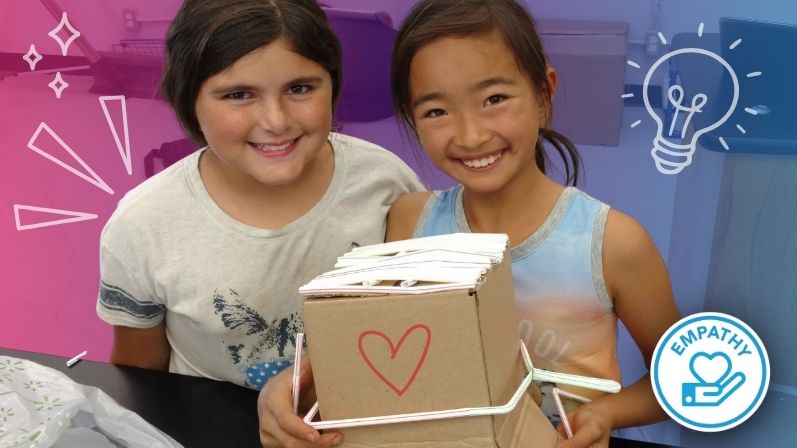
When we hear the word “entrepreneurship,” our minds often jump straight to boardrooms or big business. But at VentureLab, we see it differently. Entrepreneurship isn’t just about starting a company; it’s a mindset that empowers youth to identify needs, brainstorm creative solutions, and make a positive impact on the world.
At the very core of this mindset is empathy. It is the fuel that transforms a simple idea into a meaningful solution.
The “Why”: Empathy Fuels Innovation
Why do we prioritize empathy in entrepreneurship education? Because it fuels innovation.
We know that empathy isn’t just a “soft skill”—it’s a measurable driver of creativity and innovation. This past summer, students at First Five and Beyond in Washington state participated in VentureLab’s Idea to Pitch Program, and the results were incredible:
- 100% of students reported anincreased sense of empathy.
- 100% of students grew in their ability for idea generation.

This isn’t a coincidence. Empathy fuels innovation. When students connect with the human element of a challenge, they don’t just find “an” idea—they find a meaningful one. By understanding the “why” behind a person’s struggle, their brains are unlocked to generate a wider, more diverse range of possibilities.
⚡ It Shifts Perspective: Instead of just “finding a problem,” empathy encourages students to find a need to fill or an opportunity to improve someone’s life.
⚡ It Builds Social Awareness: Empathy is a key part of Emotional Intelligence, helping youth understand diverse perspectives and cultures.
⚡ It Connects Learning to Life: When students use empathy, they see how their skills—whether in science, art, or math—can solve real-world problems for real people.
The “How”: 4 Ways to Bring Empathy into Your Learning Space
Empathy is a skill that can be practiced and improved, just like any other. As educators, we can model this “entrepreneurial thinking” by practicing it ourselves.
Here are a few ways to boost this mindset in your students:
1. Walk in Their Shoes (Role Play)
Have students use their imagination to pretend they are someone else experiencing a specific challenge. Ask them, “How might this person feel? What do they really need?”
- ✏️ Resource: Download our Empathy Activation Cards to encourage empathy and discover opportunities to help others.
2. The Power of Active Observation
Encourage students to “people watch” with a purpose. What do they notice? What challenges might a person be facing in their community or even at their own kitchen table?
- ✏️ Resource: Download our Identifying Opportunities worksheet for recording observations.
3. Interviewing for Insight
Teach students to ask “Why?” and “How?” by interviewing others about their experiences. This moves them from assumptions to deep understanding.
- ✏️ Resource: Download out “But Why? Activity” to help students learn to dig deeper and uncover new solutions to problems they encounter.
4. Create a “Brave Space”:
Model empathy in your own teaching by creating a safe (and brave) space where students feel heard and valued. When you validate their thinking by calling them “creative,” “empathetic,” or “resourceful,” you build the confidence they need to lead.
- ✏️ Professional Development: Learn more about our Entrepreneurial Mindsets for Educators course to find out how entrepreneurial thinking can improve your teaching experience.
The Bottom Line
Entrepreneurship education is about equipping the next generation with the vision to see a need and the heart to do something about it.
When we prioritize empathy, the student outcomes go beyond the classroom:
- Resilience through Connection: Students who design for others are more motivated to persevere through failure because their work has a “why” that is bigger than themselves.
- Future-Ready Leadership: In an increasingly automated world, human-centric skills are what will set students apart in any career path they choose.
- Civic Agency: By learning to identify needs in their own communities, students shift from being passive observers to active “world-changers” who know they have the power to create progress.
We aren’t just teaching kids how to be kind—we’re teaching them how to be world-changers. ♥️