
Student Goal Setting for success
VentureLab |
December 30, 2025
Goal Setting for 2nd – 12th Grade Students
Every great innovation begins with a spark of curiosity and the active pursuit of opportunities. Through curiosity, students explore the world with wonder; through opportunity seeking, they identify problems worth solving—giving rise to a Big Idea, a bold vision of what could be. While these two stages are essential for generating that initial spark, a Big Idea only becomes reality when students learn to channel their vision into structured action.
Empower students to go beyond asking “What if?” by teaching them the courage and adaptability required to voice their biggest dreams and, crucially, to structure those dreams into an achievable plan. The goal-setting process is what activates their limitless potential to learn and accomplish anything.
Dreaming big is the critical first step, but goal setting is the map that harnesses that initial spark, ensuring students translate their vision into meaningful, measurable impact. This resource provides the proven tools to begin that journey.
1. Brainstorming: Idea Generation & Opportunity Seeking
This is where abstract dreams begin to take shape. Successful entrepreneurs practice Opportunity Seeking and Idea Generation by actively looking for problems to solve or skills to acquire.
- Challenge students to look across different areas—personal, academic, and even community challenges—to find a compelling goal.
🧠 Creativity is key here; the more ideas, the better!
- Result: By brainstorming across various domains, students identify the specific challenge or skill that excites them most, which becomes the foundation for their plan.
2. Setting the Goal: Blueprint for Success
Every Big Idea needs a reliable blueprint to become a reality. This crucial stage involves structuring a goal so that a vague aspiration can become a concrete, measurable action plan, fueling problem-solving and resourcefulness.
The core activity here is Goal Setting — breaking down the path to success and proactively identifying challenges.
- For Grades 2 – 4 (Foundational Mapping): Younger learners build their blueprint by addressing essential questions about their hopes and dreams. They focus on identifying why they are passionate, brainstorming ways to achieve the goal, recognizing potential obstacles, and thinking about how to overcome them. This scaffolded approach develops foundational planning skills without the formal acronym used in the SMART Goal framework.
⭐ Younger students, particularly those in lower elementary, may require additional assistance to fully complete the activities.
- For Grades 5 and Up (SMART Goals): Students use the SMART Goal framework to define their goal as Specific, Measurable, Achievable, Relevant, and Time-bound. This process directly demands adaptability and persistence. By applying this pragmatic filter, students ensure their goal is an effective solution grounded in real-world feasibility.
- 🧠 Entrepreneurial Mindset Focus: This step demands adaptability (adjusting the plan when obstacles arise) and persistence (committing to the action). By defining their goal clearly, students create checkpoints and demonstrate a commitment to action.
Result: Regardless of age, this process ensures students design effective solutions (the goal) grounded in personal passion and feasibility.
3. Visualizing Success: The Pitch and Confidence
A final, powerful step is imagining the moment of achievement. Harness optimism and reinforce the importance of embracing failure by showing the reward of persistence and grit.
- When students write and sketch their moment of success, they are practicing a critical communication skill: the pitch. They are learning to articulate why their achievement matters, how it feels, and the tangible impact it creates.
- Result: Visualization builds the confidence needed to persevere through setbacks and makes the abstract goal feel personal and achievable.
Ready to ignite potential? Select the resource that empowers your students to turn their big ideas into real-world achievements!
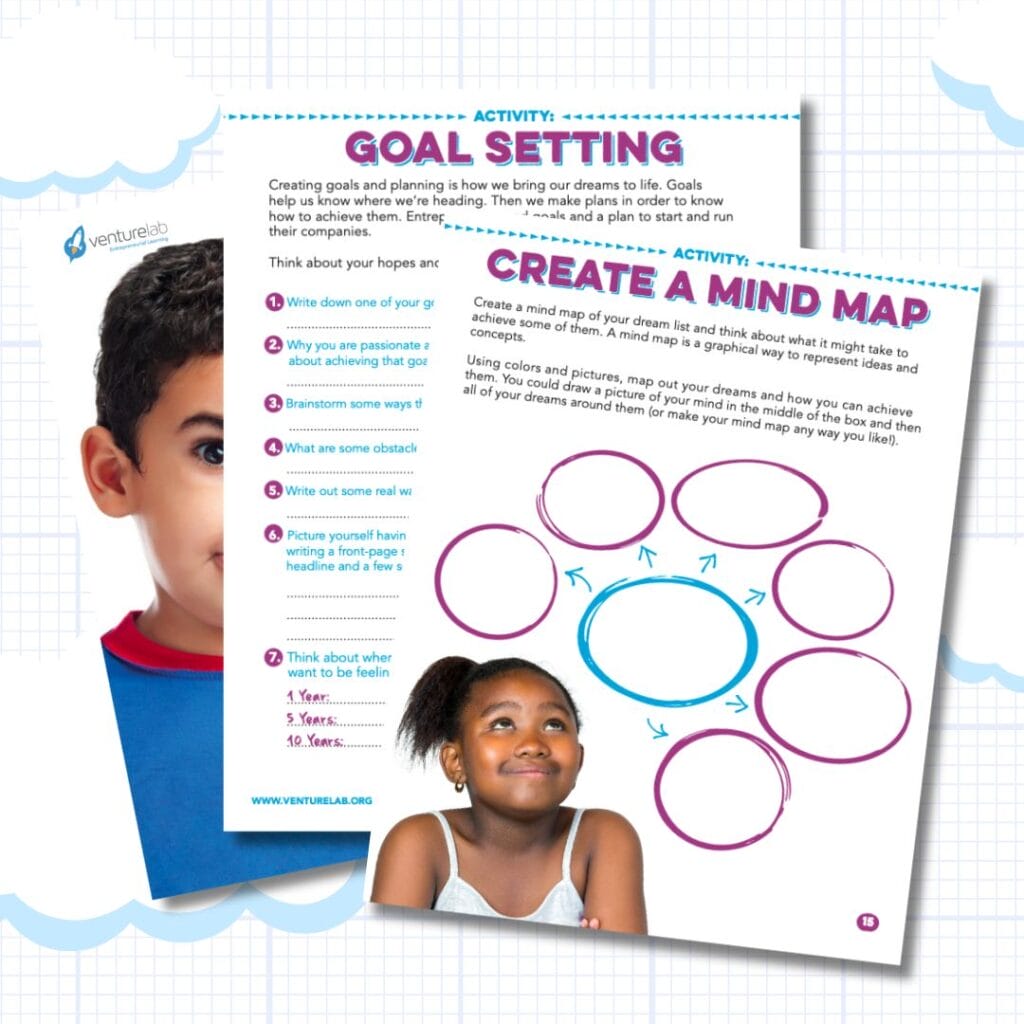
Download our “Learning About Yourself” Kit to guide your Grade 2 – 4 students through goal-mapping questions and fun activities to identify their unique strengths and build unshakable confidence!*
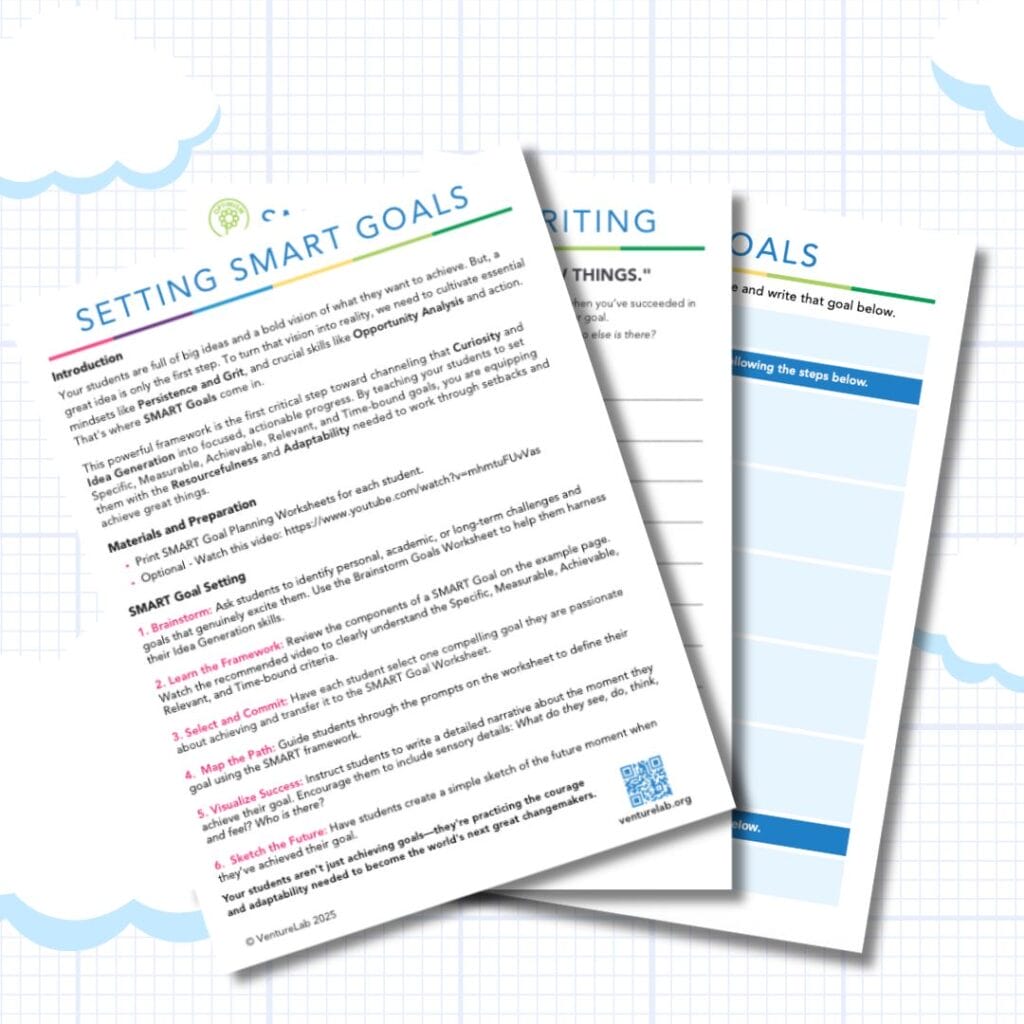
Download the SMART Goals Resource Kit to equip your Grade 5+ students with brainstorming tools, the complete SMART framework for precision planning, and powerful visualization exercises for success!
Video Resources for Goal Setting Success
Reinforce these planning skills with our instructional videos. Share these directly with your students or use them as a powerful professional development tool.
* Learning About Yourself is part of our complete Caregiver resource. You can download the complete guide here: Caregiver Workbook.