
Why “Entrepreneurial” Brain Breaks Are a Game Changer
VentureLab |
March 2, 2026
Activating Discovery Mode Through Playful, Creative Problem-Solving
6 Entrepreneurial Brain Breaks to Turn On Discovery Mode and Reset Learning:
- This Is Not… (The Imagination Pivot)
- Squiggle Birds (The Visual Pivot)
- Reverse Brainstorming (The “Worst Idea” Pivot)
- Body Language Game (The EQ Reset)
- Story Starters (The Collaboration Spark)
- Mindset Matching Game (Critical Thinking)
One of the world’s most iconic toys of all time wasn’t born in a boardroom or from data crunching — it emerged from simple, playful moments of observation. While away from her busy role as Mattel co-founder, Ruth Handler watched her daughter Barbara imaginatively role-play with paper dolls, projecting big dreams of future careers and adventures far beyond the baby dolls that dominated the market.
In that moment of observation, Ruth saw an opportunity: to transform girls’ playful daydreaming into a three-dimensional doll with endless possibilities. That vision eventually led to Barbie’s 1959 debut—named after Barbara herself and empowering generations through open-ended, imaginative play. It’s proof that sometimes our greatest breakthroughs hide in the spaces between focused tasks.
At VentureLab, we see these spaces as a Discovery Mode — short, structured opportunities that shift the brain from analytical stress to playful, creative problem-solving. These aren’t distractions—they’re intentional toggles that unlock entrepreneurial thinking in young minds.
6 Effective Discovery Mode Sprints To Activate Young Minds
These quick activities (5 – 15 minutes) boost cognitive flexibility, spark innovation, and reset focus.
1. This Is Not… (The Imagination Pivot)
- The Sprint: Pick an everyday object (like a pencil). Hold it up and say, “This is not a pencil, this is an elephant’s trunk!” Move the pencil to your nose, make an elephant sound, and have the whole group mimic the gesture and sound together. Pass the object and let the next person transform it into something new.
- The Result: This breaks “functional fixedness”—the mental block that makes us see objects only in one way.
Visit our free resource: This is Not… for more details.
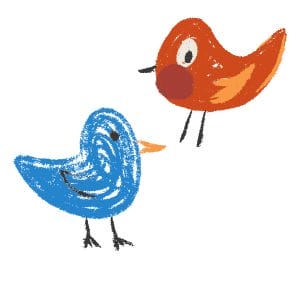
2. Squiggle Birds (The Visual Pivot)
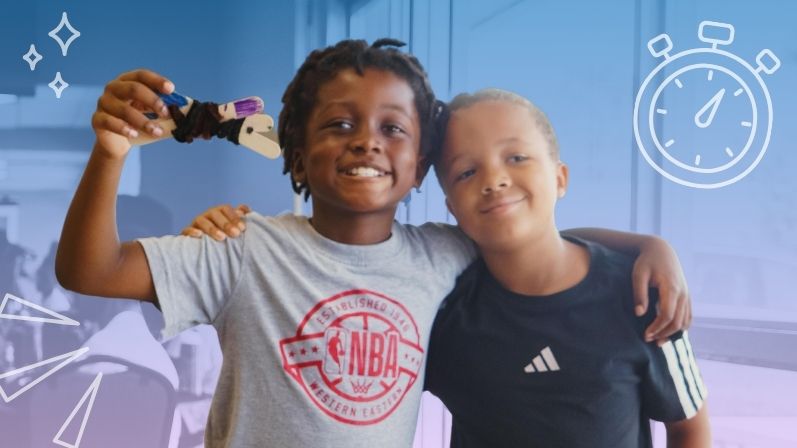
- The Sprint: Have everyone draw 5–10 random “squiggles” on a piece of paper. Then, give them 60 seconds to turn every squiggle into a bird by adding a beak, eyes, and feet.
- The Result: It forces the brain to find order in chaos—a key skill for entrepreneurs and a perfect reset for visual-spatial reasoning.
3. Reverse Brainstorming (The “Worst Idea” Pivot)
- The Sprint: Take a goal (like “making the library more fun”) and flip it: “How could we make this the worst library in human history?” Spend 2 minutes listing the most “wacky” or terrible inventions/ideas possible.
- The Result: Laughter releases dopamine, which acts like a “reset button.” It also identifies real problems by looking through a humorous lens.
4. The Body Language Game (The EQ Reset)
- The Sprint: Match the Message: Students create short messages to match given tones and body language, enhancing their communication creativity.
- The Result: It builds emotional intelligence (EQ) and provides a total sensory reset by moving the body.
Visit our online Body Language Game for more information.
5. Story Starters (The Collaboration Spark)
- The Sprint: Give the group a bizarre first sentence (e.g., “I was sitting at the bus stop when an elephant walked by…”). Each person adds exactly one sentence to the story.
- The Result: It builds mental agility, forcing the brain to react and create in real-time.
Visit our Story Starter Generator for more details.
6. The Mindset Card Matching Game
- The Sprint: Use our interactive tool to flip and match pairs of mindset cards—like Optimism, Resilience, or Curiosity. Once a match is made, the player shares a personal example: “I was optimistic when I kept practicing my layup even after missing three times.”
- The Result: Encourages “meaning-making.” By matching the card and then sharing a story, students internalize these mindsets as personal strengths.
Play the Mindset Matching Game.
Why Discovery Mode Works
Neuroscience reveals the brain operates in two key modes: “Looking Out” (Focus Mode: analytical, task-driven) and “Looking In” (Discovery Mode: reflective, exploratory, via the Default Mode Network (DMN). Research from USC’s Mary Helen Immordino-Yang and others shows the DMN activates during rest, mind-wandering, and internally focused thought—supporting memory consolidation, idea connection, self-reflection, and creative insight generation.
When you introduce a short brain break like these sprints, you’re not losing time—you’re toggling networks to let the brain refresh, reorganize, and make novel links that focused effort alone often misses.
- Focus Mode: Analytical, problem-solving, task-driven
- Discovery Mode: Reflective, exploratory, pattern-seeking
When students shift into Discovery Mode, the brain:
- Consolidates memory — moving knowledge into long-term storage
- Connects ideas — linking the “what” to the “why”
- Unlocks creativity — producing solutions no amount of focused work alone can reveal
Like Ruth’s Barbie solution, these sprints activate hidden connections and unexpected insights, showing students that play is a legitimate tool for innovation.
Mastering the Pivot: The “Secret” to the Transition
Worried Discovery Mode might derail focus? A simple way to keep it productive:
The Sharing Reward: Only a few people share their ideas during the sprint. If the next task finishes early, everyone can share. This creates motivation to return to the next focused challenge.
Rules for Discovery Mode Time:
- Keep it Short: Sprints are quick.
- Low Stakes: There are no “wrong” answers.
- Cool Down: End with a physical reset, like a deep breath.
The Bottom Line
Discovery Mode isn’t “lost time.” It is a tool used by history’s greatest innovators to see solutions invisible to focused effort alone. By giving youth short, playful sprints — whether visual, physical, or collaborative — you teach them how to innovate, just like Ruth Handler did when she used thoughtful observation to create one of the biggest breakthroughs in the toy industry.